
Sign up for daily news updates from CleanTechnica on email. Or follow us on Google News!
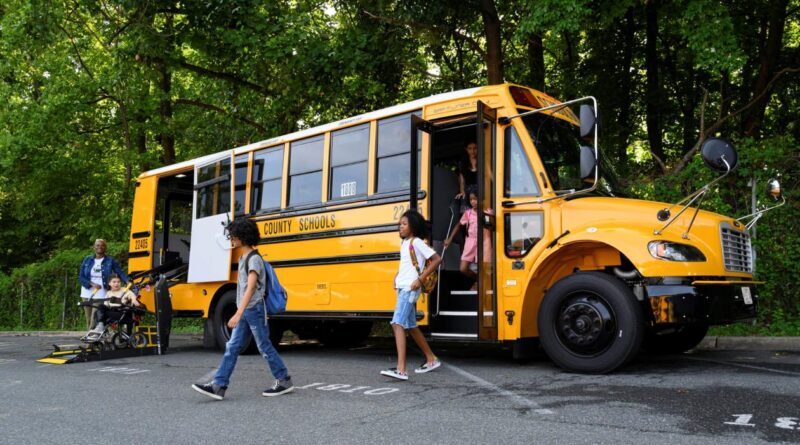
School buses, intended to provide safe and secure rides for all children, are largely failing kids with disabilities, prompting urgent calls for improvements.
“I experienced accessibility problems at least three times a week,” one youth reflected in a student discussion. Either there was not enough space to secure a wheelchair, or “the wheelchair securements were set up in a really awkward configuration that required me to contour myself like a pretzel.” They added that “the lift breaks all the time or it’s so slow that you are 20 minutes late to class.”

Another student raised the lack of accessibility for people who use canes or crutches rather than wheelchairs. “In my district, there is no solution to sit down on the wheelchair lift [without a wheelchair] … and so, it’s either stand on top of the thing that’s moving, which isn’t safe, or walk up the [steep] stairs, which is also not safe.”
Their experiences are not unusual. WRI and SeededGround interviewed students with disabilities, their parents, school district and transportation professionals and advocates, and heard a slew of safety risks. Issues ranged from unreliable wheelchair ramps and lifts to untrained or inexperienced bus operators and monitors. They reported inadequate or missing accessibility features for students across the disability spectrum.
Yet, the moment is ripe for change: The electric school bus revolution currently underway in the U.S. offers a chance to right historical wrongs and provide better, safer routes to school for multi-marginalized children across America.
A Rough Road to School for Students with Disabilities
Roughly 15% of K–12 students — more than 7 million kids — have a disability. For many of them, school buses are their only means of getting to school. But despite laws guaranteeing accommodations for disabled children, our research found that school buses are often inaccessible to those experiencing both mental and physical disabilities. Alongside difficulties with features such as ramps and wheelchair tie-downs, many students deal with stimulation sensitivities from the diesel engine’s noise, vibrations and smell.
Moreover, interviewees across the board described how transportation access issues are more acute in low-income and communities of color due to historic disinvestment. Research has found that students with disabilities and students of color experience longer commutes to school than white and nondisabled students. This not only increases the amount of time kids spend in uncomfortable riding conditions, but also exposes students and drivers to higher levels of diesel pollution that can cause asthma, cancer and other respiratory illnesses.
“Here [among tribes in the Southwest region], one of the issues that our students with disabilities have is the long distances they might be on a bus just to get to school. [One client] would spend the better part of three plus hours on a school bus [a day],” explained an attorney with the Native American Disability Law Center.
Many underserved communities also suffer from a historic lack of investment in transportation infrastructure. Youth, parents and professionals alike shared concerns about the poor condition of roads and sidewalks in rural and immigrant communities, which can make getting to school with a disability even harder. “Many of the roads on the Navajo nation are unpaved… if it rains or it’s snowy, these unpaved roads can get very muddy. I’ve had clients who missed a week of school because the family truck just cannot get out of the property,” the same attorney shared.
Respondents also cited that emergency plans for bus breakdowns often lack specific or adequate plans for students with disabilities.
Students aren’t the only ones who would like to see school buses improved. Parents, professionals and advocates reported safety risks for bus drivers and caregivers due to bus design issues and highlighted the need for better workforce training and planning. “If buses were made to work better for bus operators, people would stick around in those jobs longer, and you wouldn’t have as many staffing shortages,” a transit union representative shared.
How Electric School Buses Can Help
Around the country, more and more school districts are shifting from diesel to electric school buses. And momentum continues to grow. As of April 2024, over 12,000 electric school buses were committed across 49 states and several territories and Tribal nations; a nearly tenfold increase in adoption since August 2021.

For students with disabilities, this transition could transform the school commute. It offers an opportunity to design and purchase more accessible buses as new electric fleets are built from the ground up. Students we interviewed proposed a range of innovative solutions, such as designing buses with larger rooftop safety hatches to accommodate emergency evacuations for students of all body types and to facilitate the exit of medical equipment during emergencies. They also suggested using more flexible seatbelt materials and offering related options to better serve those with sensory and allergy disabilities. As one student emphasized, “Just because something is not broken, does not mean it is accessible.”
Electric buses are also a quieter and smoother ride, which can be more comfortable for students with disabilities. One school district in West Virginia found that the reduced noise allowed for easier communication between the driver and students, alleviating safety concerns and overstimulation. And electric buses have no tailpipe emissions, meaning they would eliminate exposure to dangerous diesel fumes.
New Policies Prioritize Funding for Accessible Electric Buses, but More is Needed
Federal funding has been key to unlocking the electric school bus transition. To date, the shift has largely been funded by a $5 billion investment through the federal Clean School Bus Program (CSBP). A growing number of states are implementing their own transition targets and funding programs, too, including Washington, New York, New Jersey, Michigan, Maryland, Maine, District of Columbia, Delaware, Connecticut, Colorado and California.
As the equity benefits of electric buses become clearer, recent policy shifts have sought to prioritize more of this funding to under-resourced communities — including students with disabilities.
In a recent Executive Order, the Biden Administration expanded the definition of “environmental justice” to include race, income, Tribal affiliation, national origin and, importantly, disability status. This designation is important: Under the federal Justice40 Initiative, “environmental justice” groups are eligible to receive priority funding from climate investments such as the Clean School Bus Program. This allows agencies to address the specific needs of disabled children and other disadvantaged groups more effectively. And the additional funding may incentivize districts to prioritize transitioning their buses serving students with disabilities.
However, this policy shift is only a start. As of spring 2024, few funding programs offer additional funds specifically for accessibility features; New York and the EPA’s funding programs are among the first. We do not know whether the additional funds per bus are sufficient to cover the full costs of an accessible bus. Additionally, where programs do offer additional funds to help address the higher upfront costs, we are not aware of an active program that prioritizes applications that request accessible buses.
ESB Funding Programs that Offer Additional Funds for ADA-compliant Lift
| State | Agency | Funding Program | Additional Funds | Year Additional Funds Made Available |
|---|---|---|---|---|
| Federal | Environmental Protection Agency (EPA) | CSBP | Applicants are able to request up to $20,000 per bus in additional funds for ADA-compliant replacement buses equipped with wheelchair lifts | 2023 |
| Federal | EPA | Clean Heavy-Duty Vehicles Program | ADA-compliant school buses are eligible for an additional $20,000 per-vehicle funding cap (i.e., a total per-vehicle funding cap of $300,000) | 2024 |
| California | CALSTART (on behalf of the California Air Resources Board (CARB)) | Hybrid and Zero Emission Truck and Bus Voucher Incentive Project | Maximum Voucher Amounts
Type A: $285,000 (w/o lift); $310,000 (w/ lift) Type C: $350,000 (w/o lift); $375,000 (w/ lift) Type D: $370,000 (w/o lift); $395,000 (w/ lift) |
2023 |
| California | CARB | Zero-Emission School Bus and Infrastructure Grant | ZESBI recipients may receive an additional $15,000 plus-up for the purchase of an eligible school bus equipped with a wheelchair lift | 2024 |
| Michigan | Michigan Department of Education | Clean Bus Energy Grant | School districts are eligible to receive an additional 5% of funding for the procurement of an ADA accessible bus | 2024 |
| New York | New York State Energy Research and Development Authority | School Bus Incentive Program | Complementary School Bus Voucher Wheelchair Add-On Amount across new ESB types is $8,000 | 2023 |
Source: WRI (Note: Table may not be visible on your mobile device.)
What Will It Take to Ensure Electric Buses Are Accessible for All Students?
In our research, youth and adult participants alike supported expanding policies that will prioritize more funds for accessible buses. But more funding is not all that’s needed to ensure the transition is done right.
For starters, respondents stressed the importance of implementing protective measures for early technology adopters. Districts that are the first to receive and test new technology often face significant costs and time demands, a phenomenon known as the “early adopter tax.” And these leaders can feel pressure to execute plans flawlessly, fearing that any perceived failures could be used as an excuse to deprioritize underserved communities in the future. Providing sufficient technical assistance, additional funds for capacity building, and workforce development during deployment could offer additional support for early adopters.
Youth and adult participants also emphasized that students with disabilities should be meaningfully included in all aspects of the electric school bus transition. This can help ensure that their needs and concerns are adequately reflected in advocacy, manufacturing, procurement and distribution of electric buses.
Stakeholder-specific recommendations included:
- School districts should prioritize the transition of buses that serve students with disabilities and other underserved communities. They should include accessibility features, such as a wheelchair ramp or lift, on every bus to create universal transportation access for students with disabilities.
- Manufacturers should consult with disabled students during bus design to both address current design problems and develop and offer innovative access options. For electric school buses specifically, this can include an announcement or noise system to address the hazards that quiet electric buses pose to people with vision disabilities.
- Policymakers should incentivize school bus operators to prioritize transitioning the buses that serve students with disabilities and other underserved communities and to expand the number of buses that serve them. This can include prioritizing funding applications and/or granting additional funds for school districts that are requesting accessible electric school buses.
Finally, respondents emphasized that students and adults with disabilities should be incorporated as leaders within the electric school bus transition. For example, disabled students could be appointed to advisory boards. This would better identify and address key components such as sufficient transportation access to achieve the transition in all communities.

Making Students’ “Accessibility Dream” a Reality
Electric school buses offer myriad benefits for students, the environment, human health and air quality. However, they must be designed and implemented specifically with equity and justice in mind. Otherwise, they risk replicating current patterns of systemic inequality.
As one youth survey respondent said, “My accessibility dream would be for electric school buses to be designed similarly to public transit buses. As a kid, I always wanted to ride the bus with all the non-disabled kids as opposed to being segregated to an accessible bus. I do absolutely understand that some students need that separate bus in a more directly supportive environment, but it seems like school buses should be able to be made inclusive, especially as they’re already being designed differently to be electric.”
In collaboration with partners and communities, WRI’s Electric School Bus Initiative aims to build unstoppable momentum toward an equitable transition of the entire U.S. fleet, benefitting children and families across the country and normalizing electric mobility for an entire generation. The transition offers a unique opportunity to redefine accessibility and ensure that students with disabilities are effectively supported, promoting a safer, healthier and more equitable transportation system.
Learn more about disability rights and disability justice:

This article was co-authored by Justice Shorter, founder of SeededGround, and Valerie Novack, a disability policy researcher and advocate.
By Alyssa Curran, Sophie Young, Carla Walker, Justice Shorter and Valerie Novack. Courtesy of WRI.
Have a tip for CleanTechnica? Want to advertise? Want to suggest a guest for our CleanTech Talk podcast? Contact us here.
Latest CleanTechnica.TV Videos

CleanTechnica uses affiliate links. See our policy here.
CleanTechnica’s Comment Policy
